

Pediatric cardiac surgery is a specialized surgery that is recommended and performed to fix various heart-related problems in children. The existence of such problems are often since birth. Doctors perform this surgery to help the heart pump blood properly to allow the child to grow while safely performing physical activities. In some cases, doctors might use minimally invasive pediatric surgery to make very tiny cuts, which helps kids heal much faster.
Reasons for which a pediatric cardiac surgery is performed
Doctors perform pediatric cardiac procedures to repair heart defects. This helps the heart work the right way.
Common symptoms that may prompt the need for this surgery include:
- Trouble breathing easily
- Slow growth and weight gain
- A bluish tint on the skin or lips
- Constant tiredness and low energy
- Catching frequent lung and chest colds
Indications
A child might need heart surgery for these reasons:
- Serious birth defects in the heart
- Blood flowing the wrong way inside the heart
- Blockages in heart valves or tubes
- Uneven or jumping heartbeats
- Weak pumping of the heart
- Requiring another heart operation
Contraindications
Sometimes, surgery is not safe right away. Reasons to wait or avoid surgery include:
- Having other severe illnesses
- Untreated germs or sickness
- Being extremely underweight or weak
- The heart being currently too weak for an operation
- Unique heart shapes that make surgery risky
- The baby being too tiny for the procedure
- Families deciding against the surgery
How to Prepare for Surgery
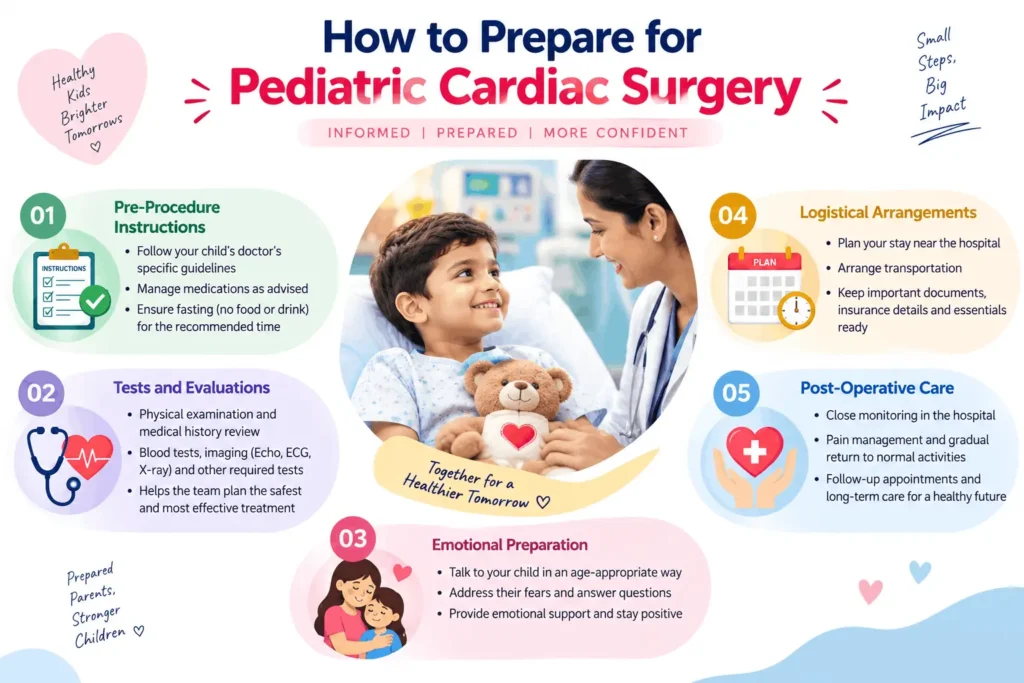
Getting ready helps keep your child safe and comfortable.
1. Pre-Procedure Instructions:
The doctor will tell you what your child can eat. The child is not permitted to be fed any food or drinks after midnight before the surgery to ensure safety during sleep. It is important to inform the doctor if the child is on any kind of medication.
2. Tests and Evaluations:
The common diagnostic tests that are performed include blood tests, X-rays, and heart scans. Under these evaluations, doctors come together to plan the safest medicine for your child.
3. Emotional Preparation:
Making the child emotionally prepared is very important to build the right expectation. Knowing the facts helps clear up any pediatric surgery myths your family might have heard.
4. Logistical Arrangements:
Pack bags for a hospital stay of a few days, and do not skip carrying main essentials such as toiletries, clothes, and essential documents.
5. Post-Operative Care:
Before discharge, the medical experts impact complete guidance on post-operative measures. There are special instructions to deal with the cuts and for administering the medicines. You will also set up dates to check their healing.
A step-by-step procedure
1. Before the Procedure:
Before the surgical procedure starts, the child is given a surgical gown to wear after reaching the hospital. A preliminary health check is done by the nurses, and the doctor usually gives sleep medicine through a small tube in the arm to help your child relax.
2. During the Procedure:
In the operating room, there is a dedicated team of experts to handle the procedure with utmost safety while taking care of your situation. The procedure is done to repair valves or close holes wherein a close watch is kept to understand the child’s heart rate.
3. After the Procedure:
Your child wakes up in a safe room. You can see them as soon as they are stable. The team will keep the pain away and watch for any problems.
4. Discharge Planning:
The hospital team will teach you how to care for your child at home and plan future doctor visits.
Risks
- Some of the most common risks are germs getting into the wound, losing more blood than usual, unexpected reactions to sleep medicine, or the heart beating out of rhythm.
- There are certain serious risks that are rare. These include blood clots traveling to the brain, other body parts not working right, having to go back to the operating room, or health challenges that stick around as they grow.
Recovery
- Immediate Post-Operative Care: The child stays in the Pediatric intensive care unit (PICU) for 1 to 3 days. Doctors watch them closely.
- Hospital Stay: Next, the child is moved to a regular room for 5 to 10 days. They will slowly start walking.
- At-Home Recovery: At home, do watch for fever or redness near the cut. Parents often worry about the pediatric heart surgery cost, but knowing your child is safe is the main focus. For convenient local support, it is best to join hands with a reliable pediatric surgery hospital in Hyderabad.
- Aftercare Tips:
- Pill schedules: Give all medicines exactly on time.
- Skin care: Keep the chest scar clean and dry.
- Healthy eating: Feed them good foods to build strength.
- Resting up: Take a break from running and jumping for 4 to 6 weeks.
- Extra love: Give lots of hugs and comfort.
- Resuming Normal Activities: Most kids can return to normal play in 6 to 8 weeks, but check with your doctor first.
FAQs
1. How long will the actual heart surgery take?
The time in the operating room depends on what needs fixing. Simple repairs take about 3 to 4 hours. Harder surgeries can take 6 hours or more. The doctor will give you updates while you wait so you always know what is going on.
2. How is my child’s pain managed after the operation?
Keeping your child comfortable is very important to the care team. Right after the surgery, they get strong pain medicine through a small tube in their arm. When they move to a regular room, they will take liquid or pill medicines instead, which you will also use at home.
3. Can parents stay with their child in the hospital?
Yes, hospitals want parents close by. In the Pediatric Intensive Care Unit (PICU), visiting rules are a little strict to keep things quiet and safe. But when your child moves to a regular room, one or both parents can usually sleep in the room with them.
4. How big will the chest scar be, and will it go away?
The scar size depends on the surgery. Often, the doctor cuts down the center of the chest. The scar will look red and bumpy at first. Over a few years, it fades to a flat, light line, but it will not completely vanish.
5. When is it safe for my child to go back to school?
Most kids feel ready for school about 4 to 6 weeks after going home. But, they must skip gym class, heavy lifting, and rough sports for a few more months so their chest bone can fully heal.
6. How do you deal with a child falling sick at home?
It is important to connect with a heart doctor right away in cases of high fever, coughs a lot, or if the scar looks red and puffy. It is very important to catch colds early while their body is still healing from the surgery.
7. Will there be a need for further heart surgeries later?
The need for further surgeries depends on the exact heart problem. Some kids only need one surgery to fix the issue forever. Others might need more help as they grow taller and bigger. Your doctor will explain what your child might need in the future.
Conclusion
Fixing a small child’s heart is a huge decision for any family, but it is one of the most efficient and sustainable ways to help them live a long, happy, and healthy life. Modern medicines, and skilled experts ensure that the surgeries are safe. With the right care, support, and plenty of love, your child can bounce back and enjoy all the fun activities of childhood.
To avail the safest care for your child, consult the best pediatric surgeon in Hyderabad, Dr. G. M. Irfan.

Dr. GM Irfan is a senior Pediatric and Laparoscopic Surgeon with 20+ years of experience in advanced surgical care for infants and children. He is a Gold Medalist in MCh (Paediatric Surgery), & holds MRCS (Edinburgh) and specialized training from IRCAD France.