
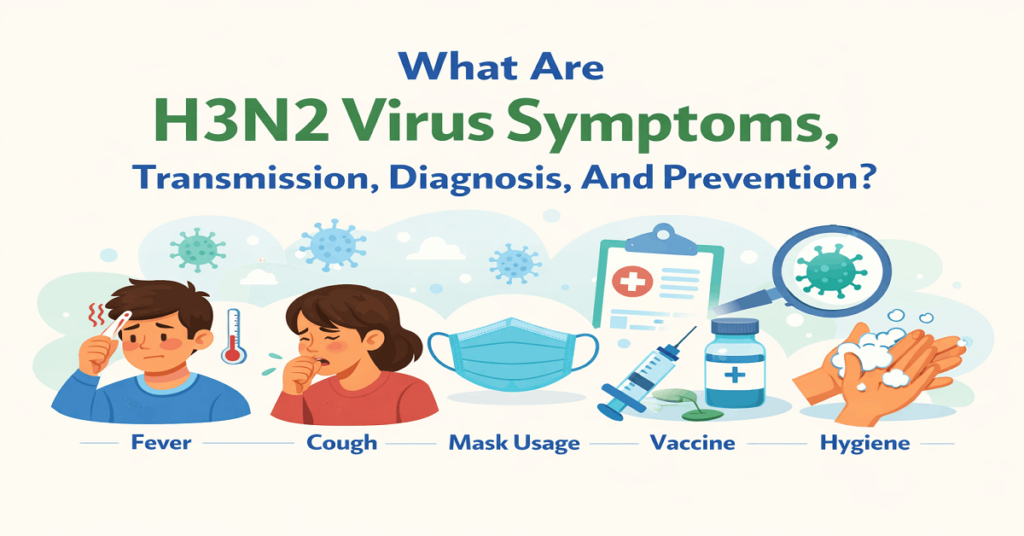
Weather changes can trigger certain viral infections, and the flu is associated with several strains, each with its own characteristics. Among the various types of seasonal Influenza, H3N2 often stands out as a bit more aggressive than other “Type A” or “Type B” strains. If you have been feeling sudden-onset body aches and a skyrocketing temperature, you aren’t merely dealing with a common cold; you might be infected with the H3N2 Influenza. Hence, understanding how this virus operates is the first step toward recovery and keeping your family safe.
What is the H3N2 virus?
H3N2 is a subtype of Influenza, a Strain that has been associated with more severe flu seasons. While it is considered a seasonal virus, it can mutate slightly from year to year, which is why health organizations update the flu vaccine annually to keep pace with these changes. It isn’t just a new virus, but it is a significant issue that might cause complications like pneumonia.
Symptoms of the H3N2 influenza infection
The prime indication of H3N2 virus symptoms is the speed with which they appear. Unlike a cold that lingers and slowly builds, H3N2 usually hits like a freight train. The infected body might feel fine in the morning and get bedridden by lunchtime.
Key indicators of the infection are:
- High-grade fever
- Excessive fatigue
- Severe muscle and body aches
- Persistent dry cough and sore throat.
- Chills and cold sweats.
- Congestion and occasionally headaches.
- In some cases, particularly in children, nausea or vomiting may occur.
How Does H3N2 Spread?
The H3N2 flu virus is extremely transmissible and travels through the air via respiratory droplets. The spread happens when any infected person coughs, sneezes, or even talks, as these are the times when they release tiny droplets containing the virus.
The infection can be contacted in following ways:
- Direct Inhalation: It indicates breathing in the infected droplets.
- Surface Transfer: Touching any kind of surface that clearly carries the virus, and then unknowingly touching the eyes, nose, or mouth.
- Close Contact: Shaking hands or sharing utensils with someone who is infected.
Diagnosis of H3N2 Virus
Because the symptoms overlap significantly with COVID-19 and other respiratory infections, a clinical “guess” isn’t enough. Doctors rely on a Rapid Influenza Diagnostic Test (RIDT) or a molecular assay, such as a PCR test, to diagnose the virus. The execution of these tests involves a quick swab of the nose or throat. Getting diagnosed early is crucial, especially if you are someone under the high-risk category, as it opens the window for specific antiviral treatments.
What is the duration for which the H3N2 Flu lasts?
The acute stage of the flu includes fever and severe aches, and it typically lasts 3 to 5 days. However, secondary symptoms, such as a lingering cough or prolonged weakness, can persist for more than 2 weeks. If symptoms seem to improve and then suddenly worsen with a new fever, it’s a red flag for a secondary bacterial infection, and you should seek medical help immediately.
Also read – Bacterial Infection in childrens.
Treatment for the H3N2 virus
When it comes to H3N2 treatment, the strategy is two-fold: attacking the virus and managing the symptoms.
- Antivirals: If infection is identified within the first 48 hours, doctors may prescribe medications that don’t “cure” the flu instantly, but can definitely shorten the duration by a day or two while helping to avoid complications.
- Supportive Care: Dehydration can be dangerous while being infected with the virus. Hence, it is recommended to increase intake of liquids, such as water, electrolytes, and herbal teas, which.
- OTC Medications: Certain OTC medications like ibuprofen offer help in cutting the fever and in fighting body aches.
Preventing H3N2 Infection
Prevention is always more effective than a cure. The primary line of defence is the annual flu vaccine. Even if the vaccine isn’t a 100% match for the circulating strain, it provides “cross-protection” that can make your illness much milder if you do catch it.
Comprehensive Paediatric Care for H3N2 Flu
Children are particularly vulnerable to H3N2, as their immune systems are still developing, and the smaller airways make congestion even more dangerous. Hence, in young children, it is essential to look for signs of respiratory distress, such as “rib pulling” (retractions) with breathing or a bluish tint to the lips. Paediatric care primarily concerns monitoring the hydration and ensuring the child’s breathing remains stable. Moreover, it is important to regularly work on ways to boost immunity in kids.
Key Takeaways!
H3N2 infection can leave a person feeling drained, but with the correct information, it is entirely manageable. By identifying the H3N2 virus symptoms early and seeking appropriate H3N2 treatment, you can navigate the illness safely. In addition to this, do take the prescribed vaccinations, and be persistent with hand hygiene.
FAQs
Q1: Is H3N2 considered more dangerous than the regular flu?
Ans: H3N2 is a kind of seasonal flu ending up in severe symptoms and higher hospitalization rates than Influenza B or H1N1.
Q2: Can an individual get infected with H3N2 twice in a particular season?
Ans: It is unlikely to get the same strain twice in a single season, as the body surely builds antibodies. However, catching a different strain, like Influenza B, later in the year is possible.
Q3: Does the flu vaccine protect against H3N2?
Ans: Yes, the annual quadrivalent flu vaccine is designed to include protection against the most likely H3N2 candidate for that season.
If you need expert guidance on respiratory health or paediatric care, connect with Dr. G M Irfan for personalized medical advice and comprehensive care.