
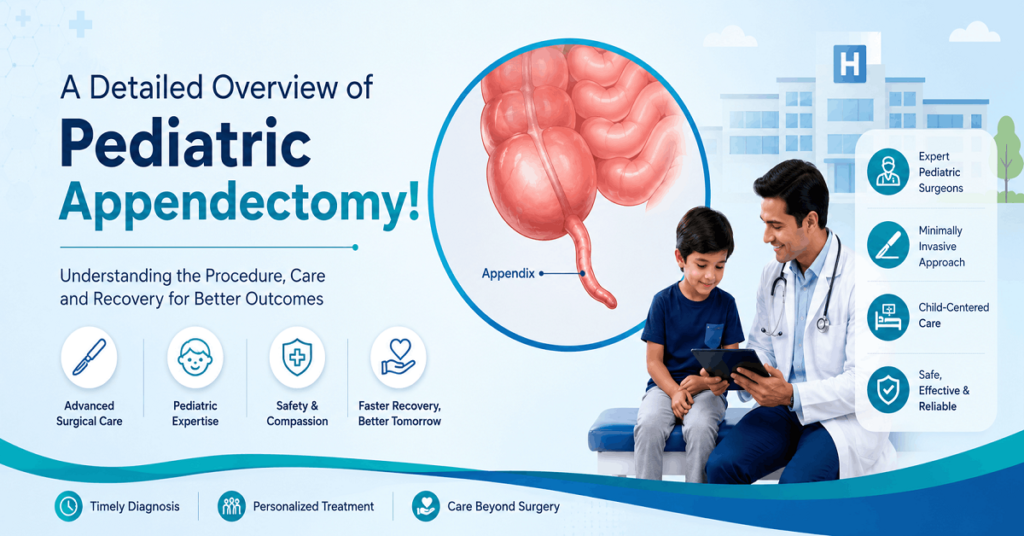
Finding out your child needs surgery is a scary moment for any parent. Out of all conditions, one very commonly observed emergency procedure in case of kids is the pediatric appendectomy. The surgery is performed to remove the appendix, a small pouch that is attached to the large intestine. When the appendix gets swollen and highly infected (a condition called appendicitis), it must be removed quickly to prevent it from bursting. The appendix surgery procedure is quite common, and has a high success rate.
Pediatric Appendectomy Surgery
A pediatric appendectomy is the primary treatment for acute appendicitis. In case of children, the symptoms often start with a vague pain, specifically around the belly button, that eventually moves to the lower right side. Unlike adults, kids might have a harder time describing their pain, which is why doctors rely on physical exams, blood tests, and imaging like ultrasounds. Because a child’s body is still growing, the surgical approach is tailored to be as gentle as possible. The goal is to remove the source of infection so your child can get back to being a kid.
Causes and Risk Factors
The main cause of appendicitis in children is a blockage in the lining of the appendix. The common reasons for the blockage are hardened stool, swollen lymph nodes in the digestive tract, or even parasites. Post getting blocked, the bacteria rapidly multiplies inside the pouch, further leading to swelling and pus.
While any child can get appendicitis, there are certain risk factors. It is most common in teenagers and school-aged children, though it can happen in toddlers. The male gender is at a slightly higher risk than girls. There are many pediatric surgery myths suggesting that swallowing seeds or gum causes this, but most cases are due to random gut blockages unrelated to specific foods.
What happens during the procedure?
When your child goes in for a pediatric appendectomy, the surgeon will choose between two main methods depending on the child’s health and whether the appendix has ruptured.
The first method is open or traditional surgery. In this version, the surgeon makes one larger incision (about two to three inches long) in the lower right part of the belly. This is often the preferred choice if the appendix has already burst or if there is a lot of infection in the area. It allows the surgeon to see the area and remove any infected fluid clearly. While the scar is slightly larger than the alternative, it is a very safe and reliable way to ensure that all the infection is gone.
The second and more common method is laparoscopic surgery. This is a “minimally invasive” approach. The surgeon performs three tiny incisions in the abdomen. A small camera called a laparoscope is inserted through one hole, while tiny tools go through the others. The surgeon watches a TV monitor to perform the pediatric appendectomy surgery. The whole method results in much lesser post-surgery pain, smaller scars, and also a quicker discharge. Most simple cases of appendicitis are handled this way today.
Recovery Period
The child’s appendix surgery recovery starts right in the hospital. Most kids stay for about 24 to 48 hours, though they might stay longer if the appendix has ruptured. In the first few days, the focus is on managing pain and getting the bowels moving again. The doctor usually recommends a specific diet plan after appendix Surgery to help the system wake up. Usually, this starts with clear liquids like broth or apple juice, then moves to soft foods like yogurt or toast, before returning to a regular diet.
At home, your child should avoid heavy lifting or gym class for about two to three weeks. It is normal for them to feel a bit tired, but they should be walking around the house to help their digestion. Most children are back to their usual, high-energy selves within a month.
Conclusion
A pediatric appendectomy can be considered a routine but vital procedure. By early diagnosis and trusting the surgical team, you can ensure your child recovers quickly and safely. The most important thing is to follow the post-op instructions and monitor the healing process.
FAQs About Pediatric Appendectomy
What should my child eat before surgery?
Since this is usually an emergency surgery, your child should stop eating and drinking as soon as appendicitis is suspected. An empty stomach is much safer for anesthesia.
How many days would my child be in the hospital?
For a simple case, they may go home the next day. If the appendix bursts, they may stay for 5 to 7 days to receive IV antibiotics.
Are there any ideal pain management options available post-surgery?
Doctors usually start with IV pain medicine and switch to oral medicine like Tylenol or Motrin once the child can drink liquids.
When can my child return to school?
Most kids can head back to class within a week, but they should skip sports and recess until the surgeon gives the okay at the follow-up visit.
Are there any peculiar signs of infection to look for?
Call your doctor if your child has a fever over 101.4°F, green or foul-smelling drainage from the cuts, or a belly that feels very hard and painful.
For expert care and a trusted pediatric surgeon in Dabeepura, Hyderabad, visit GM Clinic, the best pediatric hospital in Hyderabad, where your child receives complete care, assuring all their health & safety.

Dr. GM Irfan is a senior Pediatric and Laparoscopic Surgeon with 20+ years of experience in advanced surgical care for infants and children. He is a Gold Medalist in MCh (Paediatric Surgery), & holds MRCS (Edinburgh) and specialized training from IRCAD France.